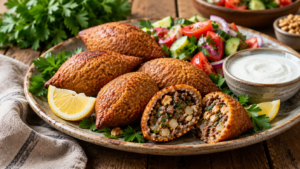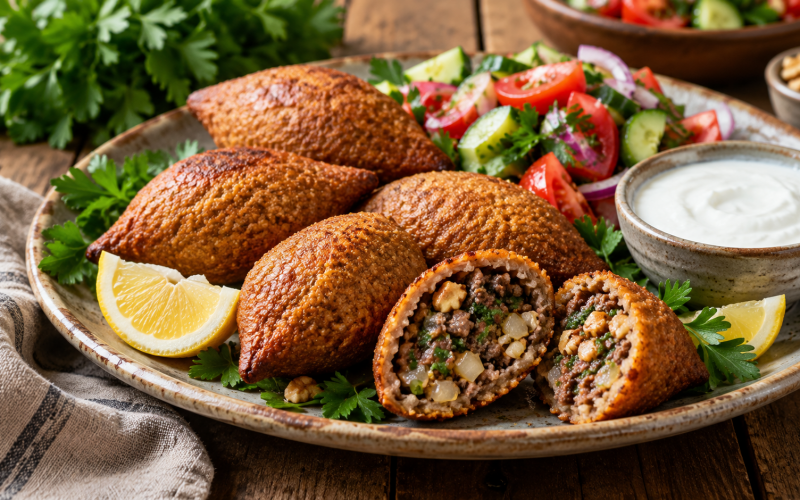
Armenian cuisine is famous for its rich flavors, carefully selected ingredients, and recipes that have been passed down through generations. Many traditional dishes reflect the history, geography, and hospitality of the Armenian people. Among these culinary treasures is ishli kufta, a delicious stuffed meat dish that combines a delicate outer shell with a savory filling of minced meat, onions, herbs, and spices.
Ishli kufta is appreciated for its distinctive texture and the skill required to prepare it. Unlike ordinary meatballs, which are usually made by mixing minced meat with other ingredients and shaping the mixture into small portions, ishli kufta features two separate layers. The outer shell is traditionally prepared from finely ground meat and bulgur, while the center contains a flavorful filling, often made with sautéed minced meat, onions, and aromatic seasonings.
The result is a dish with a tender exterior and a rich, satisfying center. Depending on the regional recipe and family tradition, ishli kufta may be boiled, fried, or prepared using other cooking methods. Each version offers a slightly different culinary experience.
Although stuffed kufta is found in several Middle Eastern and Eastern Mediterranean culinary traditions, it has a special place in Armenian food culture. Armenian cooks have developed their own approaches to preparing and serving this dish, preserving traditional techniques while adapting recipes to available ingredients and personal preferences.
For travelers interested in discovering Armenia through its food, ishli kufta is an excellent dish to try. It offers a glimpse into the country’s culinary heritage and demonstrates how simple ingredients can be transformed into something truly memorable.
What Is Ishli Kufta?
Ishli kufta is a traditional stuffed meat dish made from a shaped outer shell and a seasoned filling. The name is commonly associated with stuffed kufta, a family of dishes in which a meat-based mixture surrounds a savory center.
The outer layer is often prepared using finely ground beef or lamb combined with fine bulgur, water, and seasonings. The mixture is kneaded until it becomes cohesive enough to form a thin shell around the filling. In some recipes, the meat and bulgur are processed several times to achieve an especially smooth texture.
The filling usually consists of minced meat cooked with onions, salt, black pepper, and other seasonings. Depending on the recipe, cooks may also add parsley, walnuts, or additional spices. The filling is prepared separately and allowed to cool before the kufta is assembled.
Once the two components are ready, the cook takes a portion of the outer mixture and shapes it into a small hollow shell. A spoonful of filling is placed inside, and the opening is carefully sealed. The stuffed portion is then shaped into an oval, a pointed oval, or another form associated with the cook’s preferred tradition.
The finished kufta is cooked until the exterior is firm and the filling is thoroughly heated. Boiled versions are generally tender and delicate, while fried versions develop a more pronounced crust.
One of the defining features of ishli kufta is the contrast between its two layers. The outer shell is relatively mild and earthy, with a subtle flavor from the bulgur and meat. The filling is richer and more intensely seasoned, creating a satisfying balance in every bite.
Ishli kufta is often served as a main course, but it can also appear as part of a larger meal featuring salads, vegetables, herbs, bread, and other traditional dishes. Its preparation requires patience, which makes it particularly suitable for family gatherings and occasions when people come together to cook and share food.
History and Cultural Significance of Ishli Kufta
The history of ishli kufta belongs to a broader culinary tradition shared across Armenia and neighboring regions. Stuffed meat dishes have developed in many parts of the Middle East, the Caucasus, Anatolia, and the Eastern Mediterranean. These cuisines have influenced one another over centuries through trade, migration, cultural exchange, and the movement of families between regions.
The word kufta is related to a family of names used for minced-meat dishes in several regional cuisines. The exact spelling and pronunciation vary between languages, and recipes bearing similar names can differ significantly in their ingredients, shape, and cooking methods.
In Armenian cuisine, kufta is not a single standardized dish. The name may refer to different preparations depending on the region and the recipe. Ishli kufta belongs to the stuffed variety, in which a seasoned outer mixture encloses a separate filling.
Traditional Armenian cooking developed around ingredients that were widely available in the region. Meat, wheat products, herbs, onions, and seasonal vegetables played important roles in everyday meals and festive cooking. Bulgur, made from parboiled and dried wheat that is cracked into smaller pieces, became a useful ingredient in many dishes because it was versatile, filling, and easy to store.
Combining bulgur with meat created a mixture that could be shaped and cooked in different ways. Stuffing this mixture with a separate filling added flavor and made the dish suitable for serving as a substantial meal.
Recipes were commonly transmitted within families rather than recorded in a single definitive form. Grandmothers, mothers, and other experienced cooks taught younger family members how to select the right bulgur, prepare the meat, knead the mixture, shape the shells, and seal the filling without breaking the delicate exterior.
These practical skills were essential because successful ishli kufta depends on technique as much as on ingredients. The shell must be thin enough to provide a pleasant texture but strong enough to hold the filling during cooking. The filling must be flavorful without being excessively wet or oily.
Regional and family differences are therefore an important part of the dish’s identity. One household may prefer a more pronounced onion flavor, while another may use additional herbs or nuts. Some cooks favor boiled kufta, whereas others prefer a crisp fried exterior.
It is also important to recognize that Armenian ishli kufta exists within a wider regional tradition. Turkish içli köfte, for example, shares the basic concept of a bulgur-based shell surrounding a seasoned filling. Similarities between these dishes reflect the long history of culinary interaction across neighboring communities. Their precise relationship and local forms should not be reduced to a simple claim that one modern national cuisine exclusively owns the entire tradition.
For Armenians, traditional dishes such as ishli kufta can carry emotional significance beyond their ingredients. Preparing familiar food may connect people with childhood memories, family celebrations, and relatives who taught them to cook. For Armenian communities living abroad, these recipes can also help preserve a connection to their cultural heritage.
Today, ishli kufta remains an appealing example of how traditional cooking combines practical knowledge, regional identity, and the pleasure of sharing a carefully prepared meal.
Essential Ingredients for Traditional Ishli Kufta
The ingredients used to prepare ishli kufta are relatively simple, but their quality and proportions have a considerable effect on the final result. The two main components—the outer shell and the filling—must be prepared separately before they are brought together.
Ingredients for the outer shell
Fine bulgur
Fine bulgur is one of the most important ingredients in many traditional versions of ishli kufta. It helps create the characteristic texture of the shell and works together with the meat to form a cohesive mixture.
Fine bulgur is preferable to coarse bulgur because it softens more readily and produces a smoother result. If only a coarser variety is available, it may require a different soaking process and may not produce the same delicate texture.
Minced meat
Lean beef is commonly used for the outer mixture, although lamb or a combination of meats may be suitable depending on the recipe. The meat should be finely ground so that it combines evenly with the softened bulgur.
Too much fat can make the shell difficult to handle and may cause it to break during cooking. However, the meat should not be so dry that the mixture becomes crumbly.
Water
Water is used to soften the bulgur and adjust the consistency of the outer mixture. It should be added gradually because the amount needed depends on the bulgur, the meat, and the preparation method.
Salt and spices
Salt and black pepper provide the basic seasoning. Some recipes include paprika, allspice, cumin, or other spices, but the exact combination varies by household and regional tradition.
Ingredients for the filling
Minced meat
Beef or lamb is suitable for the filling. The meat is usually cooked before the kufta is assembled, allowing the flavors to develop and excess moisture to evaporate.
Onions
Finely chopped onions provide sweetness, aroma, and moisture. They are generally sautéed until soft and lightly golden before the minced meat is added or finished cooking.
Butter or oil
A small amount of butter or vegetable oil helps soften the onions and cook the filling evenly. The amount should be sufficient to develop flavor without leaving the filling greasy.
Fresh herbs
Parsley is a popular addition that brings freshness to the savory filling. Depending on the recipe, other herbs may also be used.
Walnuts
Some versions include finely chopped walnuts. They provide a pleasant crunch and a rich, slightly earthy flavor that complements the meat.
Additional seasonings
Salt, black pepper, and selected spices are used to season the filling. The ideal balance depends on personal preference, but the seasoning should be noticeable enough to distinguish the center from the milder outer shell.
Serving ingredients
Ishli kufta can be served with lemon wedges, fresh herbs, seasonal vegetables, or a simple salad. Depending on the style of the meal, yogurt-based sauces and other accompaniments may also be offered.
Lemon is particularly useful with richer meat fillings because its acidity provides contrast and helps balance the overall flavor.
Traditional Ishli Kufta Recipe: Step by Step
Preparing ishli kufta takes more time than making ordinary meatballs, but the process becomes easier with practice. The most important steps are preparing a cohesive outer mixture, cooking a well-seasoned filling, shaping the shells evenly, and sealing them securely.
The following recipe is a practical home-cooking interpretation inspired by traditional stuffed kufta preparations. Armenian family recipes differ, so the proportions and seasonings can be adjusted to suit the particular style you want to reproduce.
Ingredients
For approximately 12–16 medium-sized pieces, depending on their size:
For the outer shell:
- 300 g fine bulgur
- 300–350 g lean minced beef
- Approximately 200–250 ml warm water, adjusted as needed
- 1 teaspoon salt, or to taste
- Black pepper to taste
For the filling:
- 300 g minced beef or lamb
- 2 medium onions, finely chopped
- 2 tablespoons vegetable oil or butter
- 40–50 g chopped walnuts, optional
- A small handful of chopped parsley, optional
- Salt and black pepper to taste
- A pinch of allspice or another preferred spice, optional
For serving:
- Lemon wedges
- Fresh parsley or other herbs
- Fresh vegetables or salad
Step 1. Prepare the bulgur
Place the fine bulgur in a large bowl and add warm water gradually. Allow it to absorb the water until it softens. Follow the bulgur package instructions where necessary, since different products require different amounts of liquid and resting time.
The goal is to soften the grains without turning them into a wet paste. If excess water remains, drain it carefully.
Allow the bulgur to cool before combining it with the raw meat. A mixture that is too wet will be difficult to shape, while insufficiently hydrated bulgur can leave the shell rough and prone to cracking.
Step 2. Prepare the meat filling
Heat the oil or butter in a frying pan over medium heat. Add the chopped onions and cook them until softened and lightly golden.
Add the minced meat, breaking it apart with a wooden spoon or spatula. Cook until the meat is thoroughly browned and no raw portions remain.
Season with salt, black pepper, and any additional spices you have chosen. If you are using walnuts, add them toward the end of cooking. Stir in the parsley after the mixture has cooked, if desired.
Continue cooking until excess liquid has evaporated. The filling should remain moist enough to taste pleasant but should not be watery.
Transfer it to a plate or shallow dish and let it cool completely. A hot filling can soften the outer mixture and make the kufta difficult to assemble.
Step 3. Make the outer mixture
Combine the softened bulgur with the lean minced beef, salt, and black pepper in a large bowl.
Knead the mixture thoroughly until the ingredients are evenly distributed and the texture becomes cohesive. Depending on the recipe, the mixture may be processed in a food processor or passed through a meat grinder to obtain a smoother consistency.
Add a little water only if necessary. The finished mixture should be pliable and moist enough to shape, but it should not stick excessively to your hands or fall apart when pressed.
If the mixture feels crumbly, allow it to rest briefly and reassess its moisture. If it is too wet, additional fine bulgur may help, provided it is given enough time to hydrate.
Step 4. Divide the mixture into portions
Prepare a clean work surface and keep a small bowl of water nearby for moistening your hands.
Divide the outer mixture into equal portions. Consistent portion sizes make it easier to produce kufta that cooks evenly.
Take one portion and roll it gently between your palms. Press a finger into the center and carefully widen the opening while rotating the piece.
The aim is to create a hollow shell with reasonably even walls. If one side becomes much thinner than the other, the shell may break during stuffing or cooking.
Step 5. Add the filling
Place a small amount of cooled meat filling inside the hollow shell. Avoid overfilling it, because too much filling can prevent the opening from closing securely.
Gently bring the edges together and pinch them closed. Smooth the seam with damp fingers, ensuring that no openings remain.
Traditional shapes vary, but an elongated oval with slightly pointed ends is a common choice. The exact shape is less important than keeping the shell intact and the filling evenly distributed.
If the mixture cracks, moisten your fingers and smooth the surface. Small cracks are easier to repair before cooking than after the kufta has been placed in hot water or oil.
Step 6. Shape the remaining kufta
Repeat the process with the remaining portions, arranging the finished pieces on a tray.
Try to keep the size and thickness reasonably consistent. Very large pieces may require longer cooking, while small ones can cook quickly and may be more delicate to handle.
If the outer mixture becomes difficult to work with, pause and adjust its consistency rather than forcing it into shape.
Step 7. Choose your cooking method
There are several ways to cook stuffed kufta. The appropriate method depends on the particular recipe and the texture you prefer.
Boiling
Bring a large pot of water to a gentle boil. Reduce the heat so that the water simmers rather than bubbling aggressively.
Carefully lower the kufta into the water in small batches. Avoid overcrowding the pot, as this can make the temperature drop and increase the risk of the pieces sticking together.
Cook until the kufta is fully cooked through. The exact time depends on their size, the thickness of the shell, and the filling. Check a test piece by cutting it open to ensure the center is hot and the meat is thoroughly cooked.
Remove the finished pieces carefully with a slotted spoon and allow excess water to drain.
Frying
Heat enough oil in a suitable pan or deep fryer to cook the kufta evenly. Once the oil reaches an appropriate frying temperature, lower the pieces carefully into it in small batches.
Fry until the exterior becomes golden brown and crisp and the center is thoroughly cooked. Avoid adding too many pieces at once, because overcrowding lowers the oil temperature and can lead to greasy results.
Allow the cooked kufta to drain briefly on a rack or paper towels.
Frying produces a different texture from boiling, with a more pronounced crust and a richer flavor. It also requires more attention to oil temperature and cooking time.
Step 8. Serve immediately
Arrange the finished ishli kufta on a serving plate and garnish with fresh herbs or lemon wedges.
Boiled versions are generally best served warm, when the shell remains tender. Fried versions are especially enjoyable shortly after cooking, while the exterior is still crisp.
Serve the dish with a fresh salad, vegetables, or other accompaniments of your choice. The contrast between the savory meat filling and fresh, bright flavors makes the meal more balanced.
Secrets to Perfect Ishli Kufta
Ishli kufta rewards careful preparation. Even when the ingredients are correct, small mistakes in texture, moisture, or shaping can affect the result. The following techniques help make the process more reliable.
Choose the right bulgur
Fine bulgur is generally the best starting point for a smooth outer shell. Coarse grains may remain noticeable in the finished mixture and can make it more difficult to shape thin walls.
The bulgur should be properly softened before it is mixed with the meat. However, it should not be saturated with water. Excess moisture weakens the shell, while insufficient moisture makes it brittle.
Knead the mixture thoroughly
A cohesive outer mixture is essential. Kneading helps distribute the meat and bulgur evenly and creates a texture that can be shaped without breaking apart.
Take enough time to work the mixture until it holds together when pressed. If the traditional recipe you are following recommends grinding or processing the mixture, this can help produce a finer consistency.
Keep the filling relatively dry
A filling that contains too much liquid can weaken the shell from the inside. Cook the onions and meat until excess moisture has evaporated, then let the filling cool before assembly.
The filling should be flavorful and moist, not dry and crumbly. Finding the right balance is one of the most important parts of the recipe.
Avoid overfilling
It may be tempting to add as much filling as possible, but an overfilled shell is more likely to split.
Use a consistent amount for each piece and leave enough room to close the opening securely. The shell should surround the filling completely.
Make the walls even
The outer shell should not be excessively thick, because too much bulgur and meat can overwhelm the filling. At the same time, very thin sections may break during cooking.
Rotate the piece as you shape it, checking that the walls are reasonably uniform. Practice improves consistency, and minor imperfections are normal when learning the technique.
Seal every piece carefully
Inspect the seam before cooking. Even a small opening can allow water or oil to enter the center and cause the shell to weaken.
Moisten your fingers lightly if the mixture begins to crack. Too much water, however, can make the surface slippery and difficult to seal.
Control the cooking temperature
For boiled kufta, a gentle simmer is preferable to a vigorous boil. Strong bubbling can cause the pieces to collide and break apart.
For fried kufta, the oil should be hot enough to brown the exterior without leaving the center undercooked. Cooking in small batches helps maintain a more consistent temperature.
Practice before serving guests
The first few pieces can serve as a test. If the shell breaks, check its moisture and thickness. If the kufta tastes dry, consider the meat’s fat content and the cooking time. If the exterior is too thick, use less outer mixture for each portion.
Once the technique becomes familiar, the process becomes easier and more enjoyable.
Popular Variations of Ishli Kufta
There is no single version of ishli kufta that represents every Armenian household. Recipes vary according to family traditions, regional preferences, available ingredients, and the occasion for which the dish is prepared.
Boiled ishli kufta
Boiled ishli kufta has a tender exterior and a softer overall texture. The flavors of the meat, bulgur, and filling remain prominent without the additional richness of frying.
This preparation is a good choice for those who prefer a less oily dish. It also highlights the quality of the outer mixture, because a well-made shell should remain intact while becoming pleasantly tender.
Boiled kufta is often served warm with fresh herbs and lemon, although the accompaniments vary.
Fried ishli kufta
Fried ishli kufta develops a golden exterior that contrasts with the savory filling. The crisp surface makes this version particularly appealing to people who enjoy different textures in a single dish.
The outer shell needs to be sealed carefully before frying. If it is too thin or has weak seams, it may split when exposed to hot oil.
Fried versions are often served as part of a larger spread or as a substantial main course.
Variations in the meat filling
Beef and lamb are both suitable for the filling, and some recipes combine them. Beef tends to provide a familiar, savory flavor, while lamb can contribute a richer and more distinctive aroma.
The choice of meat affects the final texture as well as the taste. Very lean meat may produce a dry filling unless it is cooked carefully, while excessively fatty meat can leave the center greasy.
The best option depends on personal preference and the characteristics of the traditional recipe being followed.
Ishli kufta with walnuts
Walnuts add richness and a subtle crunch to the filling. They complement sautéed onions and meat, creating a more complex texture.
The nuts should generally be chopped rather than ground into a paste, allowing their texture to remain noticeable. The amount can be adjusted to taste, and some family recipes omit walnuts entirely.
Variations with fresh herbs and spices
Parsley and other herbs can bring freshness to the filling. Black pepper provides warmth, while spices such as allspice may add depth.
The best seasoning is usually balanced rather than overwhelming. The flavor of the meat should remain central, with the herbs and spices enhancing it instead of dominating it.
Because family recipes differ, it is worth experimenting with small adjustments while preserving the basic structure of the dish.
Contemporary adaptations
Modern cooks sometimes adapt traditional stuffed kufta to suit different dietary preferences or available ingredients. Some may use alternative grains, leaner meat, or plant-based fillings.
Such adaptations can be useful, but they should be distinguished from traditional recipes. Changing the outer mixture substantially may affect its texture and the way it holds together.
For anyone interested in authentic Armenian cooking, starting with a traditional meat-and-bulgur version provides a useful foundation before experimenting with variations.
What to Serve with Ishli Kufta
Ishli kufta is a satisfying dish on its own, but the right accompaniments can make the meal more varied and balanced. Armenian food traditions place considerable importance on sharing several dishes, with vegetables, herbs, bread, and other foods complementing the main course.
Fresh vegetable salads
A salad made with tomatoes, cucumbers, onions, and fresh herbs is a natural companion to ishli kufta. Its freshness contrasts with the rich meat filling and makes each bite feel lighter.
Depending on the season, the salad can include sweet peppers, leafy greens, or other available vegetables. A simple dressing with lemon juice and a little oil is often sufficient.
Fresh herbs
Parsley and other fresh herbs provide aroma and color. They can be served as a garnish or placed on the table for everyone to add according to taste.
Herbs are particularly useful with fried kufta, where their freshness contrasts with the crisp exterior.
Lemon
A wedge of lemon allows diners to add acidity to the dish. A small squeeze can brighten the meat’s flavor and balance the richness of the filling.
Lemon is especially suitable when the filling contains lamb or walnuts.
Yogurt-based accompaniments
Depending on the recipe and serving tradition, plain yogurt or a lightly seasoned yogurt sauce can accompany kufta. Its cool, tangy character provides a pleasant contrast to warm meat.
The choice of sauce is a matter of preference rather than a requirement for every Armenian version of the dish.
Bread and other traditional dishes
Bread can be served alongside kufta as part of a larger meal. Other dishes might include vegetable preparations, rice, soups, or seasonal specialties.
For a traditional-style table, the goal is not to overwhelm the main dish with too many competing flavors. A few well-chosen accompaniments are often enough to create a satisfying meal.
Drinks
Water and non-alcoholic drinks are suitable choices for the meal. Tea may be served afterward, depending on the occasion and the household’s customs.
The most important principle is to choose accompaniments that complement the flavor and texture of the kufta rather than distract from it.
Ishli Kufta and Armenian Hospitality
In Armenian culture, food is closely connected with hospitality and family life. A meal is often more than a way to satisfy hunger: it is an opportunity to welcome guests, strengthen relationships, share stories, and maintain traditions.
Ishli kufta reflects this approach to cooking. Although its ingredients are relatively straightforward, the dish requires time and attention. The outer mixture must be prepared carefully, the filling cooked separately, and each piece shaped and sealed by hand.
Preparing a large batch can become a shared activity. One person may cook the filling while another works with the bulgur mixture, and others may help shape the kufta. This division of tasks makes the preparation more manageable and creates an opportunity for experienced cooks to teach younger family members.
Such moments help preserve culinary knowledge that might otherwise be lost. A family recipe may be remembered through practical instructions rather than exact measurements: how the mixture should feel, how thin the shell should be, or how to recognize when the filling is ready.
These details are difficult to communicate fully in a written recipe. They are learned through observation, repetition, and experience.
Ishli kufta can be served during family gatherings and festive meals, although its place on the table depends on regional and household customs. Its careful preparation makes it suitable for occasions when hosts want to offer guests something more elaborate than an everyday meal.
For Armenian families living outside the country, preparing traditional dishes can also be a way to maintain cultural connections across generations. The ingredients may be purchased far from Armenia, but the cooking process can bring back memories of family kitchens and shared celebrations.
Visitors who encounter ishli kufta in Armenia have the opportunity to experience this culinary tradition in its local setting. In a restaurant, family home, or traditional dining establishment, the dish can be part of a broader introduction to Armenian hospitality.
Ishli Kufta Compared with Other Stuffed Meat Dishes
Stuffed meat dishes appear in many cuisines, particularly across the Middle East, the Caucasus, Anatolia, and the Eastern Mediterranean. They often share ingredients and cooking principles, but differences in proportions, seasonings, shapes, and preparation methods give each version its own character.
Armenian kufta
The word kufta can describe several Armenian dishes, not all of which are stuffed. Some versions are made by combining minced meat with other ingredients and shaping it into balls or other forms.
Ishli kufta is distinguished by its separate filling enclosed within an outer shell. This structure gives it two layers with different textures and flavors.
Other Armenian kufta preparations may use different proportions of meat and grain, employ different cooking methods, or be served in different contexts. The name alone is therefore not enough to identify a specific recipe.
Turkish içli köfte
Turkish içli köfte is a close culinary relative of ishli kufta. It commonly features a bulgur-based exterior surrounding a filling made from minced meat, onions, and seasonings.
Depending on the region and recipe, içli köfte may be boiled or fried. Variations can include nuts, herbs, and different combinations of spices.
The similarities between içli köfte and ishli kufta reflect a broader regional tradition of stuffed meat preparations. At the same time, local techniques and family recipes can produce meaningful differences in texture and flavor.
It is more accurate to understand these dishes as related regional expressions than to assume that every version is identical or that the entire tradition belongs exclusively to one modern national cuisine.
Other stuffed meat dishes
Many other culinary traditions feature meat or grain-based mixtures enclosing a savory filling. Some use dough or pastry instead of a meat-and-bulgur shell, while others rely on vegetables such as peppers, tomatoes, or eggplants to hold the filling.
The ingredients may be similar, but the resulting dishes can be quite different. A pastry-based preparation tends to emphasize the contrast between a baked or fried crust and a moist center. Vegetable-based stuffed dishes highlight the flavor of the vegetable itself, while ishli kufta centers on the combination of bulgur and meat.
What makes these dishes interesting is the way different communities have developed distinct solutions to a similar culinary idea: enclosing a flavorful filling within an outer layer that contributes its own texture and taste.
Ishli kufta deserves attention not only because it is delicious, but also because it illustrates the variety and interconnectedness of regional food traditions.
Nutritional Value of Ishli Kufta
Ishli kufta provides a combination of protein, carbohydrates, and fat. Its precise nutritional value depends on the type of meat used, the proportion of bulgur, the amount of oil or butter, the size of each serving, and the cooking method.
Protein from meat
Beef and lamb provide protein, which is necessary for maintaining and repairing body tissues. Meat also supplies nutrients such as iron, zinc, and vitamin B12.
The nutritional composition varies according to the cut of meat and its fat content. Leaner meat generally provides a different balance of protein and fat from a fattier cut.
Carbohydrates from bulgur
Bulgur contributes carbohydrates and dietary fiber. Because it is made from wheat, it is not suitable for people who must avoid gluten.
The amount of fiber in the finished dish depends on the bulgur used and the proportions of the ingredients.
Fats and cooking method
The fat content of ishli kufta depends on the meat, the filling, and any oil or butter added during preparation.
Boiled kufta generally requires less added cooking fat than fried kufta. Fried versions can absorb oil during cooking, increasing their energy content.
This does not mean that one method is universally better for everyone. The appropriate choice depends on individual dietary needs and preferences.
Vitamins, minerals, and additional ingredients
Meat can contribute iron, zinc, and vitamin B12. Onions and herbs provide additional plant compounds, while walnuts, when included, contribute unsaturated fats and other nutrients.
However, ishli kufta should be considered one component of a varied diet rather than a complete source of every essential nutrient.
How to make the meal more balanced
Serving ishli kufta with fresh vegetables or salad increases the variety of foods in the meal. Choosing a suitable portion size and balancing the dish with other foods can also help create a satisfying meal.
People with specific dietary requirements should consider the ingredients and preparation method carefully. Those who need to avoid gluten should not assume that a traditional bulgur-based recipe is safe for them.
Exact calorie and nutrient figures cannot be given reliably without knowing the precise recipe, ingredient quantities, cooking method, and serving size.
Storage, Freezing, and Reheating Ishli Kufta
Because ishli kufta contains meat, proper storage is important for maintaining both quality and food safety. The best approach depends on whether the kufta has already been cooked or is still raw.
Storing cooked kufta
Allow cooked kufta to stop steaming heavily, then transfer it to a clean, shallow, covered container and refrigerate it promptly. Do not leave cooked meat at room temperature for extended periods.
As a general food-safety guideline, cooked leftovers should be refrigerated within two hours, or within one hour when the surrounding temperature exceeds 32°C (90°F).
Cooked leftovers are generally best used within three to four days when stored at 4°C (40°F) or below.
Freezing
Ishli kufta can be frozen, but the most suitable method depends on the recipe and cooking technique.
Cooked pieces should be cooled safely and packed in airtight, freezer-safe containers or bags. Separating layers with suitable food-safe material can help prevent the pieces from sticking together.
For raw kufta, freezing on a tray before transferring the pieces to a container can make it easier to remove individual portions later. However, raw mixtures containing minced meat must be handled carefully, and the recipe’s texture may change slightly after thawing.
Label the container with the date so that the storage period can be monitored. For the best quality, use frozen portions within a reasonable period rather than leaving them in the freezer indefinitely.
Reheating boiled kufta
Reheat boiled kufta gently in hot water or another suitable preparation that prevents the exterior from becoming excessively soft. Check that the center is thoroughly hot before serving.
Repeated reheating can damage the texture, so it is preferable to warm only the quantity needed for one meal.
Reheating fried kufta
Fried kufta can be reheated in an oven or air fryer to help restore some of the crispness of the exterior. A microwave is convenient, but it may soften the crust.
Whatever method you use, ensure that the center is heated thoroughly. For leftovers, the general food-safety recommendation is to reheat to an internal temperature of 74°C (165°F).
Thawing safely
The safest approach is to thaw frozen kufta in the refrigerator. Avoid leaving raw meat products to thaw on the kitchen counter.
Once thawed, handle the pieces as appropriate for raw or cooked meat, depending on their state. Keep raw meat separate from ready-to-eat foods and wash hands, utensils, and work surfaces after contact with raw ingredients.
With careful preparation and storage, ishli kufta can be enjoyed beyond the day it is made without compromising food safety.
Conclusion: Discover the Taste of Traditional Armenian Ishli Kufta
Ishli kufta is a wonderful example of the depth and diversity of Armenian cuisine. Its combination of a tender bulgur-and-meat shell with a savory filling creates a dish that is both satisfying and distinctive.
Behind its relatively simple ingredients lies a cooking technique that requires patience and practice. Preparing the outer mixture to the right consistency, cooking a flavorful filling, shaping each piece, and sealing it securely are all essential parts of the process.
The dish also represents the wider cultural significance of traditional food. Family recipes preserve practical knowledge, bring generations together, and connect people with the places and communities from which their culinary traditions emerged.
Although related stuffed kufta dishes can be found throughout neighboring regions, Armenian ishli kufta has its own place within Armenia’s rich food culture. Exploring it alongside other traditional specialties offers a rewarding introduction to the country’s culinary heritage.
If you want to discover the authentic flavors of Armenia, do not limit yourself to reading recipes. Visit local restaurants, explore traditional markets, and experience the warmth of Armenian hospitality around the table. Taste ishli kufta prepared by local cooks and discover how this beloved dish becomes part of a memorable meal.
Visit Armenia, discover its rich culinary traditions, and taste authentic ishli kufta for yourself!