Armenian cuisine is celebrated for its natural ingredients, traditional preparation methods, and harmonious combinations of flavors. Among its simple yet delightful dairy-based treats is strained matsoni with honey — a creamy, tangy fermented milk product complemented by the delicate sweetness of natural honey.
This dish brings together two ingredients with deep roots in the food culture of the Caucasus. Matsoni has long been enjoyed in Armenia as part of everyday meals, while honey has traditionally been valued as a natural sweetener and an ingredient in homemade desserts. When combined, they create a refreshing dish that can be served for breakfast, enjoyed as a light dessert, or presented as part of a traditional Armenian-inspired table.
Strained matsoni with honey stands out because of its simplicity. It does not require complicated cooking techniques, expensive ingredients, or elaborate preparation. The key is to use good-quality matsoni, remove excess whey to achieve a thick consistency, and add honey in just the right amount.
Whether you encounter it in a traditional Armenian setting or prepare it in your own kitchen, this combination offers an opportunity to appreciate the beauty of simple ingredients and the culinary traditions of Armenia.
What Is Strained Matsoni?
Matsoni is a fermented dairy product traditionally associated with Armenia and other parts of the Caucasus. It is made by fermenting milk with suitable bacterial cultures, resulting in a thick or semi-thick product with a characteristic mildly sour flavor.
Depending on the milk used, the fermentation process, and the production method, matsoni can vary in thickness, acidity, and richness. It may be made from cow’s milk or other types of milk, depending on regional traditions and the producer.
Matsoni is a familiar part of Armenian food culture. It can be eaten on its own, served alongside savory dishes, used in soups and sauces, or incorporated into baking. Its gentle acidity makes it versatile, allowing it to complement both savory and sweet ingredients.
Unlike ordinary fresh milk, matsoni develops its characteristic flavor through fermentation. This process changes the texture and taste of the milk and gives the finished product its distinctive culinary qualities.
What Does Strained Matsoni Mean?
Strained matsoni is prepared by removing some of the whey from regular matsoni. Whey is the watery liquid that separates from the thicker portion of fermented dairy.
To make strained matsoni, the product is placed in a fine sieve lined with clean cheesecloth or a suitable food-safe straining bag. It is then left in the refrigerator until the desired consistency is reached.
As the whey drains away, the remaining matsoni becomes thicker, smoother, and more concentrated in texture. Depending on how long it is strained, the result may resemble thick Greek yogurt or a soft, spreadable fresh cheese.
The process does not require cooking. Instead, it relies on gravity and time to remove excess moisture.
Straining also changes the concentration of nutrients per spoonful because water is removed. The exact nutritional composition depends on the original matsoni, the amount of whey drained, and the final yield.
The Taste and Texture of Strained Matsoni
The appeal of strained matsoni lies in its combination of creaminess and gentle acidity.
Its texture is thick and velvety, making it easy to serve in a bowl or arrange in layers with other ingredients. Its flavor is typically tangy rather than sweet, which creates an excellent contrast with honey.
When honey is added, the two ingredients balance each other naturally. The acidity of the matsoni prevents the dish from becoming overwhelmingly sweet, while the honey softens the sharpness of the fermented dairy.
This balance is what makes strained matsoni with honey so appealing. It is rich enough to feel satisfying but can remain light and refreshing when served in a moderate portion.
The History of Matsoni in Armenian Cuisine
Fermented Dairy in the Caucasus
Fermented milk products have been important in the food traditions of many Caucasian communities for generations. Before modern refrigeration became widely available, fermentation offered a practical way to transform milk into products with different textures and flavors.
Across the region, families developed their own approaches to fermenting milk, maintaining cultures, and preparing dairy products for everyday consumption.
These traditions were shaped by local agricultural practices, household needs, and the availability of milk from different animals. Fermented dairy became a versatile ingredient that could be consumed directly or used in a wide variety of dishes.
Matsoni remains one of the recognizable products associated with this broader culinary heritage.
Matsoni in Armenian Food Culture
In Armenia, matsoni is used in both traditional home cooking and modern cuisine. It can accompany bread, vegetables, and savory dishes or serve as the basis for soups, dressings, and sauces.
Its mild acidity makes it particularly useful in recipes that benefit from a refreshing dairy element. It can also be combined with fruit, honey, nuts, and other sweet ingredients.
Matsoni is valued for its versatility rather than being limited to one particular meal or preparation. Different households may prefer different consistencies, levels of acidity, and ways of serving it.
Straining matsoni provides another way to enjoy the product, producing a thicker texture that works especially well for dips, spreads, and simple desserts.
The Role of Honey in Armenian Culinary Traditions
Honey has long been used as a natural sweetener in Armenian food culture. Its flavor depends on the flowers visited by bees, the local landscape, the season, and the production method.
Armenian honey may have delicate floral notes, a rich herbal aroma, or a deeper, more pronounced taste. These differences make it possible to create distinctive flavor combinations even when using the same basic recipe.
Honey is used in traditional sweets, baked goods, and homemade preparations. It can also be drizzled over dairy products to create a quick dessert without the need for extensive cooking.
Combining honey with strained matsoni reflects a simple culinary principle: allowing a small number of good-quality ingredients to complement one another.
Although this combination fits naturally into the wider food culture of Armenia, individual recipes and serving traditions vary, and it should not be assumed that every modern preparation follows one standardized historical formula.
What Makes Strained Matsoni with Honey Special?
The Perfect Balance of Tangy and Sweet
The most distinctive feature of this dish is its contrast of flavors.
Strained matsoni has a fresh, mildly sour taste, while honey contributes sweetness and floral aromas. Together, they create a balanced flavor that can be adjusted to suit individual preferences.
A mild floral honey works well when the goal is to preserve the delicate character of the matsoni. A darker honey with a stronger aroma creates a more pronounced flavor and can make the dish feel richer.
The amount of honey is equally important. A small drizzle allows the acidity of the dairy to remain noticeable, while a larger quantity produces a sweeter, more dessert-like result.
A Creamy Texture with Minimal Preparation
Strained matsoni provides a thick and creamy base without requiring baking or cooking.
Its consistency makes it suitable for serving in small bowls, dessert glasses, or on a breakfast table alongside fresh fruit and nuts.
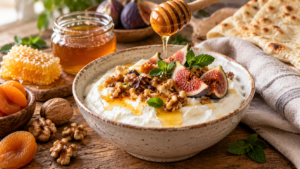
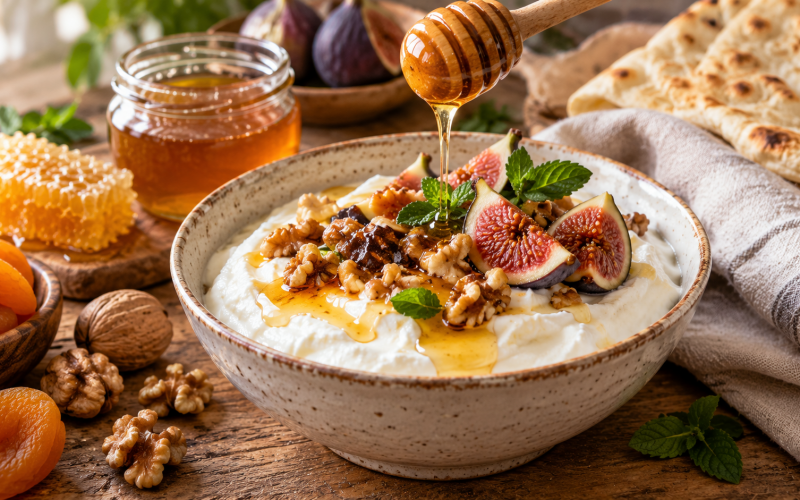
Honey can be poured over the surface or gently mixed into the dairy. Leaving it on top creates attractive golden streaks and allows each spoonful to contain a slightly different balance of sweetness.
The result is visually appealing despite the simplicity of the preparation.
A Versatile Dish for Different Occasions
Strained matsoni with honey can be enjoyed in several ways.
For breakfast, it can be served with nuts, berries, or sliced fruit. As a dessert, it can be presented in individual glasses and garnished with walnuts or dried apricots. As a snack, a small bowl provides a simple alternative to more elaborate sweet dishes.
It can also be included in an Armenian-inspired meal as a refreshing dairy-based accompaniment, particularly when served with fruit and nuts.
Its versatility makes it suitable for everyday eating as well as for occasions when a simple but attractive dish is desired.
Choosing the Best Ingredients
How to Choose Quality Matsoni
The quality of the finished dish begins with the matsoni itself.
Choose a fresh product with a clean, pleasantly tangy aroma and an ingredient list appropriate to the type of matsoni you want. If live cultures are important to you, check the product information, as processing methods differ.
The original consistency also matters. A thicker matsoni may need less straining, while a thinner product may require more time to reach the desired texture.
Full-fat matsoni often produces a richer, creamier result. Lower-fat versions can also be used, although their texture may be less luxurious.
Avoid products with an unpleasant smell, unusual discoloration, or signs of spoilage. Straining does not make spoiled dairy safe to eat.
Choosing the Right Honey
Honey is more than a sweetener in this dish. Its aroma and flavor can significantly influence the final result.
Floral honey is a good choice for a delicate, balanced dessert. Its relatively gentle sweetness allows the tanginess of the matsoni to remain prominent.
Mountain and meadow honey can provide more complex herbal and floral notes, depending on their botanical origins. Darker varieties may have a stronger, more robust flavor that works well with walnuts and dried fruit.
The best option is one whose flavor complements rather than overwhelms the dairy.
Natural honey can crystallize over time. This is a normal process and does not automatically mean that the honey has spoiled. If a smoother consistency is desired, the honey can be gently warmed in a container placed in warm water.
Honey should not be given to children under 12 months of age because of the risk of infant botulism.
Optional Ingredients and Toppings
Although matsoni and honey are sufficient on their own, additional ingredients can create new textures and flavors.
Walnuts are an excellent choice because their slightly earthy taste contrasts with the tangy dairy and sweet honey. Hazelnuts and almonds can also be used, preferably chopped into small pieces.
Fresh fruit adds color, natural sweetness, and freshness. Berries, peaches, apricots, and figs are particularly suitable.
Dried fruit, including raisins, dates, and dried apricots, creates a more concentrated sweetness. A small amount of cinnamon can add warmth, while fresh mint provides a refreshing aroma.
For the most balanced result, choose one or two toppings rather than combining too many flavors in a single serving.
How to Make Strained Matsoni at Home
Making strained matsoni is straightforward, provided that the dairy is handled hygienically and kept refrigerated.
Equipment and Preparation
You will need:
- Regular matsoni.
- A clean bowl.
- A fine-mesh sieve.
- Clean cheesecloth or a food-safe straining bag.
- A refrigerator.
Choose a bowl deep enough to collect the whey without allowing it to touch the bottom of the sieve.
Step 1: Prepare the Sieve
Place the sieve over the bowl and line it with several layers of clean cheesecloth or a suitable straining bag.
Make sure the cloth is clean and does not have any detergent or other residues that could affect the taste.
Step 2: Add the Matsoni
Spoon the matsoni into the lined sieve.
Spread it gently so that it forms an even layer. Avoid pressing it aggressively, as the whey should drain naturally.
Step 3: Refrigerate While Straining
Cover the matsoni and place it in the refrigerator.
The time required depends on the original thickness of the product and the consistency you want to achieve. Check it periodically rather than relying exclusively on a fixed time.
As the whey drains, the matsoni will become thicker and more concentrated.
Step 4: Check the Consistency
After several hours, inspect the texture. If it is still too soft, continue straining in the refrigerator.
For a creamy dessert, stop when the matsoni holds its shape on a spoon but remains easy to stir. For a thicker, spreadable consistency, allow more whey to drain.
Transfer the finished product to a clean, covered container and keep it refrigerated until serving.
How Long Should Matsoni Be Strained?
The ideal straining time depends on the intended use.
A relatively short period may be sufficient to create a thick breakfast topping. Longer straining produces a denser consistency that works well for spreads and more structured desserts.
The amount of whey removed is more important than following a rigid time limit. Regularly checking the product allows you to stop when the desired texture has been reached.
What to Do with the Whey
The liquid collected beneath the sieve is whey. Depending on the product and how it was made, it can be used in some cooking and baking applications.
For example, it may be incorporated into suitable bread doughs, pancakes, or batters where a slightly tangy liquid is appropriate.
Store the whey in a clean, covered container in the refrigerator and use it promptly. Discard it if its smell, appearance, or texture suggests spoilage.
The Traditional-Style Recipe: Strained Matsoni with Honey
This simple recipe is suitable for breakfast, a light dessert, or an afternoon snack.
Ingredients
For two servings, you will need:
- 300–400 g of strained matsoni.
- 2–4 teaspoons of honey, adjusted to taste.
- 2 tablespoons of chopped walnuts, optional.
- A small handful of fresh berries or sliced fruit, optional.
- A few mint leaves for garnish, optional.
Step 1: Prepare the Strained Matsoni
Place the strained matsoni in a bowl and stir gently until smooth.
If it is exceptionally thick, you can leave it as it is for a rich, spoonable texture or stir it briefly to make it easier to serve.
Step 2: Add the Honey
Divide the matsoni between two serving bowls.
Drizzle the honey over the top. For a more uniform sweetness, gently fold it into the dairy. For a more attractive presentation, leave some of the honey on the surface.
Start with a small amount and add more if necessary.
Step 3: Add the Toppings
Sprinkle chopped walnuts over the matsoni and add fresh fruit if desired.
A few mint leaves can provide a fresh aroma and make the presentation more appealing.
Do not add too many toppings. The aim is to complement the matsoni and honey rather than hide their flavor.
Step 4: Serve
Serve the dish chilled, preferably soon after adding the toppings.
The creamy dairy, fragrant honey, and crunchy nuts create a pleasant contrast of textures. Fresh fruit adds brightness and makes the dish particularly suitable for warm weather.
Popular Variations of Strained Matsoni with Honey
Matsoni with Honey and Walnuts
Walnuts are a natural partner for thick fermented dairy. Their earthy flavor and crunchy texture contrast with the smooth matsoni, while honey ties the ingredients together.
For additional aroma, walnuts can be lightly toasted in a dry pan and allowed to cool before serving.
Avoid adding too many nuts, as their strong flavor can overwhelm the delicate acidity of the dairy.
Matsoni with Honey and Fresh Fruit
Fresh fruit creates a lighter, more colorful version of the dish.
Strawberries and raspberries offer a pleasant tartness, while peaches, apricots, and ripe figs add a softer sweetness.
Choose ripe but firm fruit that will not release excessive liquid into the matsoni. Slice it shortly before serving to preserve its freshness.
This variation is particularly attractive as a summer dessert or a leisurely breakfast.
Matsoni with Honey and Dried Fruit
Dried apricots, figs, raisins, and dates provide concentrated sweetness and a chewy texture.
Dried apricots work particularly well with walnuts, while dates pair nicely with a darker, more robust honey.
Because dried fruit is naturally sweet, you may need less honey than in the basic recipe.
Matsoni with Honey and Cinnamon
A small pinch of cinnamon adds warmth and aroma without changing the preparation method.
This version works especially well with walnuts, almonds, and chopped apples or pears.
Use cinnamon sparingly so that its fragrance complements the fermented dairy rather than dominating it.
A Festive Version with Nuts and Fruit
For a more elaborate presentation, layer strained matsoni in small dessert glasses with honey, chopped nuts, and pieces of seasonal fruit.
Finish with a light drizzle of honey and a few carefully arranged toppings.
Individual portions are convenient when serving guests, and transparent glasses make the contrasting layers particularly attractive.
This modern presentation retains the simplicity of the original combination while making it suitable for a special meal.
Nutritional Value of Strained Matsoni with Honey
The nutritional composition of strained matsoni with honey depends on the original dairy product, the amount of whey removed, the type of honey, and the size of the serving.
Protein, Fat, and Carbohydrates
Matsoni provides protein and varying amounts of fat, depending on the milk used and the product’s formulation.
Straining removes some of the water and whey, which changes the concentration of nutrients in the remaining product. The exact effect on protein, fat, and carbohydrates depends on the composition of the original matsoni and how much whey is removed.
Adding honey increases the carbohydrate and calorie content of the dish. Nuts add additional energy, fats, and some protein.
For an accurate nutritional estimate, use the information provided by the manufacturer and account for the actual quantities of each ingredient.
Fermentation and Live Cultures
Matsoni is produced through fermentation, a process in which microorganisms transform components of milk and contribute to the product’s characteristic taste and texture.
Some products contain live cultures at the time of consumption, but this depends on production and processing. Fermented dairy should not automatically be considered equivalent to a probiotic supplement, and specific health effects cannot be assumed for every product.
Straining changes the texture and concentration of the dairy but does not, by itself, establish the presence or quantity of particular live microorganisms.
Honey as a Natural Sweetener
Honey contributes natural sugars and a distinctive aroma. Its flavor can make a small quantity sufficient to sweeten the matsoni.
However, natural honey still contributes sugars and calories. The fact that it is less processed than some other sweeteners does not mean that unlimited quantities are appropriate.
A modest drizzle is often enough to create a satisfying balance between the tanginess of the dairy and the sweetness of the honey.
Portion Size and a Balanced Diet
A serving of strained matsoni with honey can be part of a varied diet.
For breakfast, it can be combined with fresh fruit and a moderate amount of nuts. As a dessert, it can be served in smaller portions after a meal.
People who need to monitor their sugar intake or who have specific dietary requirements can adjust the amount of honey and choose a matsoni that suits their needs.
How to Serve Strained Matsoni with Honey
As a Traditional-Style Breakfast
For breakfast, serve strained matsoni with honey alongside fresh fruit, walnuts, and Armenian lavash or bread.
The dairy provides a creamy base, while the fruit and nuts introduce contrasting flavors and textures.
A simple presentation is often the most appealing: a bowl of thick matsoni, a drizzle of honey, and a small selection of fresh toppings.
As a Dessert
Strained matsoni can be an alternative to heavier cream-based desserts.
Serve it chilled in small bowls or dessert glasses, with honey drizzled over the surface. Add a few berries, chopped walnuts, or pieces of dried apricot for additional flavor.
The contrast between the cool dairy and fragrant honey makes the dessert especially enjoyable after a substantial meal.
As a Snack
A small serving of matsoni with honey is easy to prepare when you want something sweet without baking or cooking.
Keep the recipe simple and adjust the amount of honey to your preference. Fruit or nuts can be added if you want a more substantial snack.
As Part of an Armenian-Inspired Table
Strained matsoni with honey can be served alongside a selection of fruit, nuts, and traditional bread as part of a larger Armenian-inspired meal.
It also offers an interesting contrast to savory dishes, particularly when presented as a separate dessert rather than mixed into the main course.
In this setting, its appeal lies in the balance of flavors and the simplicity of the ingredients.
Strained Matsoni vs. Greek Yogurt and Other Dairy Products
Strained Matsoni and Regular Matsoni
The principal difference is moisture content.
Regular matsoni generally contains more whey and has a softer consistency. Strained matsoni is thicker because some of that liquid has been removed.
Both products can be served with honey, but strained matsoni tends to hold its shape better and creates a richer, creamier texture.
Strained Matsoni and Greek Yogurt
Strained matsoni and Greek yogurt can look similar because both may have a thick, creamy consistency.
However, they are not necessarily the same product. They may differ in their fermentation cultures, production methods, flavor, and degree of acidity.
Matsoni has its own place in Armenian and Caucasian culinary traditions, while Greek yogurt is associated with a different regional food heritage.
Either product can be used in a recipe that calls for thick fermented dairy, but the final taste will depend on the product selected.
Strained Matsoni and Cream Cheese
Very thoroughly strained matsoni can become dense enough to resemble a soft fresh cheese.
However, its flavor generally remains more tangy than that of many cream cheeses, and its fat content may be considerably different.
For a honey dessert, the tanginess of strained matsoni is often an advantage because it balances sweetness and keeps the dish from tasting excessively rich.
Common Mistakes When Making Strained Matsoni with Honey
Although the dish is simple, a few mistakes can affect the result.
Straining for too little time. If too much whey remains, the matsoni may be runny and the honey may spread throughout the liquid rather than sit on the surface.
Straining for too long. Excessive straining can produce a consistency that is too dense for a creamy dessert. Check the texture periodically and stop when it suits your intended use.
Using unsuitable equipment. A dirty cloth or a container that is not food-safe can affect the quality of the finished product. Always use clean equipment.
Adding too much honey. Excessive sweetness can hide the delicate tanginess that makes this combination distinctive. Begin with a small amount and adjust gradually.
Adding watery toppings too early. Juicy fruit can release liquid and make the dish thinner. Add fresh fruit shortly before serving.
Storing the dish incorrectly. Matsoni is a perishable dairy product. Keep it refrigerated during straining and after preparation, and do not leave it at room temperature for extended periods.
Storage and Food Safety
Strained matsoni should be prepared and stored under hygienic conditions.
Keep the product refrigerated throughout the straining process. Use a clean sieve, bowl, and cloth, and avoid unnecessary contact with hands or other surfaces.
Once the desired consistency has been reached, transfer the matsoni to a clean, covered container and refrigerate it promptly. Follow the original product’s use-by guidance and use the homemade strained product within a short period, as its safe storage life depends on the starting product and handling conditions.
It is generally best to add honey, nuts, and fresh fruit shortly before serving. This helps maintain the intended texture and freshness.
If the matsoni develops an unusual smell, discoloration, mold, or another sign of spoilage, discard it rather than attempting to save it by straining or adding honey.
Honey itself should be stored according to the producer’s instructions and handled with clean utensils.
Strained Matsoni with Honey in Modern Armenian Cuisine
Armenian cuisine continues to evolve while maintaining strong connections with traditional ingredients and family cooking practices.
Matsoni remains useful in both home kitchens and contemporary restaurants because it can be adapted to many different dishes. Chefs may serve it as a sauce, incorporate it into savory recipes, or combine it with fruit and sweet ingredients to create modern desserts.
Strained matsoni with honey fits particularly well into this approach. Its basic preparation is uncomplicated, but the final presentation can range from a rustic bowl served at home to a carefully arranged restaurant dessert.
Local honey, seasonal fruit, and regional nuts can give the dish a stronger connection to the landscape and agricultural traditions of Armenia.
At the same time, contemporary additions should be understood as variations rather than assumed to be ancient or universal Armenian customs.
The lasting appeal of this combination comes from its flexibility: a familiar fermented dairy product, a natural sweetener, and a few optional ingredients can create a dish that feels both traditional and modern.
Discover the Taste of Strained Matsoni with Honey
Strained matsoni with honey demonstrates how a few simple ingredients can create a memorable culinary experience. The thick, creamy texture of strained matsoni complements the sweetness and aroma of honey, producing a dish that can be enjoyed for breakfast, as a snack, or as a light dessert.
Its preparation is straightforward, but the quality of the ingredients makes a real difference. Fresh matsoni, carefully selected honey, and a balanced choice of toppings allow the natural flavors to shine.
Whether served simply with a drizzle of honey or enhanced with walnuts, seasonal fruit, and aromatic herbs, this dish offers a taste of the ingredients and culinary traditions associated with Armenia.
Come to Armenia and try strained matsoni with honey for yourself — discover its unique balance of creamy tanginess and natural sweetness while experiencing the warmth and hospitality of Armenian cuisine!